Before YouTube and AI: How 2600 Magazine Spread Hacker Knowledge
Long before cybersecurity became a billion-dollar industry, before YouTube tutorials, Discord servers, online courses, and AI assistants, there was a completely different way people learned about technology.
Key Takeaway
Curiosity, persistence, and the willingness to learn deeply remain the foundation of cybersecurity success, even as technology evolves.
Knowledge was scarce
If you were a curious teenager in the 1970s or 1980s fascinated by computers, phone systems, electronics, or hacking, there were no endless online resources waiting to guide you. There was no Google search box, no GitHub repositories, and no step-by-step walkthroughs available in seconds.
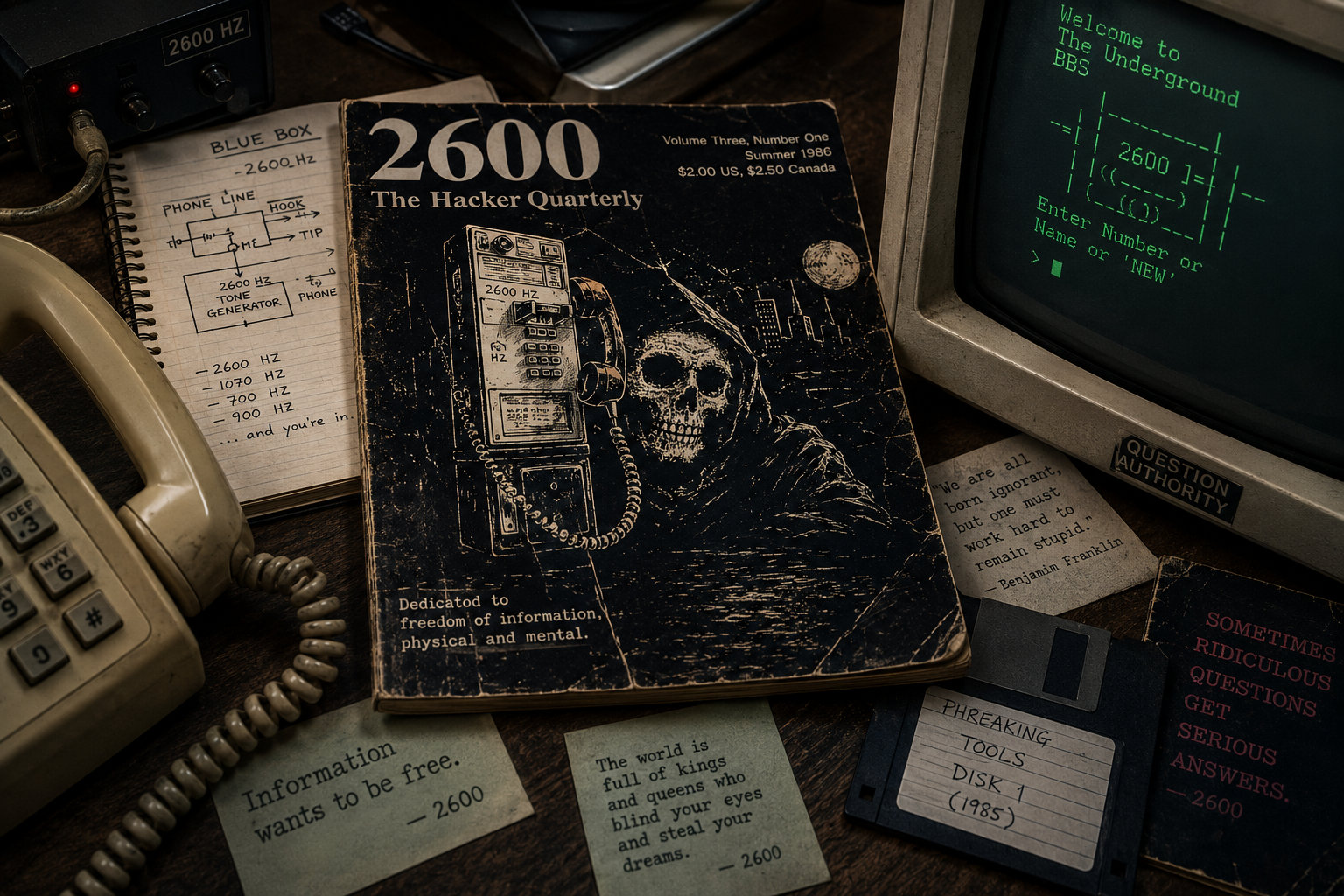
Instead, information traveled slowly through underground communities, bulletin board systems, local meetups, photocopied notes, and publications like 2600: The Hacker Quarterly.
The rise of 2600 Magazine
First published in 1984, 2600: The Hacker Quarterly became one of the most recognizable publications associated with hacker culture. Named after the famous 2600-hertz tone used by early phone phreakers to manipulate telephone systems, the magazine explored technology, telecommunications, security, hacking culture, privacy, and freedom of information.
To outsiders, it probably looked mysterious or even dangerous, but to many readers it represented something much simpler: curiosity. It connected people who wanted to understand how systems worked beneath the surface.
Related Service
Get in touch with SecureProbe →Early hacker culture
What’s interesting looking back now is how different the mindset was compared to how many people view hacking today. Early hacker culture was not originally built around ransomware, cybercrime, or financial gain. For many people, it was about exploration.
They were fascinated by hidden infrastructure — telephone networks, operating systems, radio frequencies, and eventually the internet itself. Figures like John Draper became legendary not because they were wealthy or powerful, but because they represented technical curiosity pushed to unusual extremes.
The internet changed everything
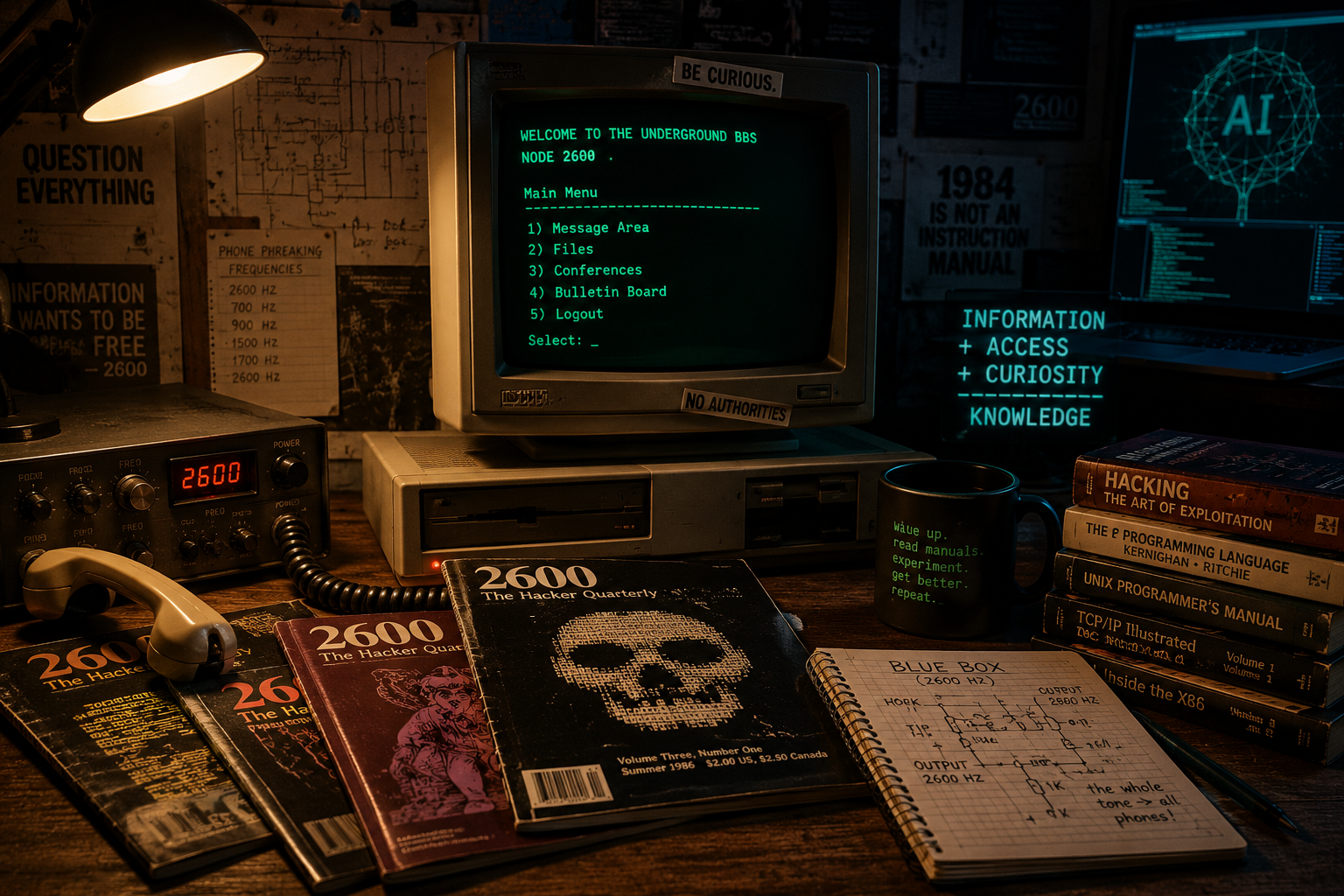
Information that once circulated through magazines, underground meetups, and BBS systems suddenly became globally accessible. Forums replaced bulletin boards. IRC channels replaced phone trees. Open-source projects exploded.
YouTube tutorials made technical learning visual and immediate. GitHub allowed researchers to share tools instantly with the world. The barrier to entry collapsed almost overnight.
The AI revolution
Now we’re entering another major shift with artificial intelligence. AI is transforming how technical knowledge is accessed and understood in much the same way the internet once did.
Complex concepts that used to require hours of research can now be explained in seconds. Code can be generated instantly. Security tools can be understood faster than ever before. The distance between curiosity and capability has never been shorter.
What remains the same
But even with all of these technological changes, something important has stayed the same. The people who succeed in cybersecurity are still the people who are genuinely curious.
The tools evolve. The platforms evolve. Access to information evolves. But curiosity, persistence, and the willingness to learn deeply remain the foundation of everything. AI can accelerate understanding, but it cannot replace critical thinking, experimentation, or ethics.
Real-World Risk
While technology has evolved dramatically, the core mindset of exploration and understanding systems remains surprisingly familiar.
Key lessons from hacker history
Related Articles
Need help validating real-world risk?
SecureProbe provides penetration testing, vulnerability assessment, and attack surface analysis services designed to identify practical security risks and provide clear remediation guidance.
Request an Assessment